

Malacañang began as a country house on the banks of the Pasig River, acquired by the Spanish colonial government in the early nineteenth century as a summer residence for the governor-general. It later became the official seat of colonial and then national power in the Philippines.
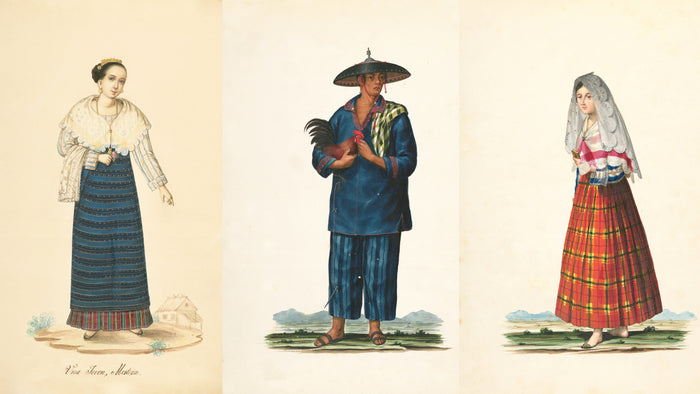
José Honorato Lozano documented this building as part of his Tipos del País watercolors, a body of work produced in the mid-nineteenth century recording the architecture, institutions, and daily life of Philippine society. The Casa de Campo de Malacañang depicts the riverside country house of the governor-general, recording the residence in its earlier form. Lozano worked primarily in Manila and produced illustrations that served as visual records of Philippine society for both local and foreign audiences. His work is considered among the most detailed and culturally specific visual documentation of the Philippines in the Spanish colonial period.
This print preserves a record of Malacañang as a colonial riverside residence in the mid-nineteenth century.
Available as a fine art print
→ View print here


