

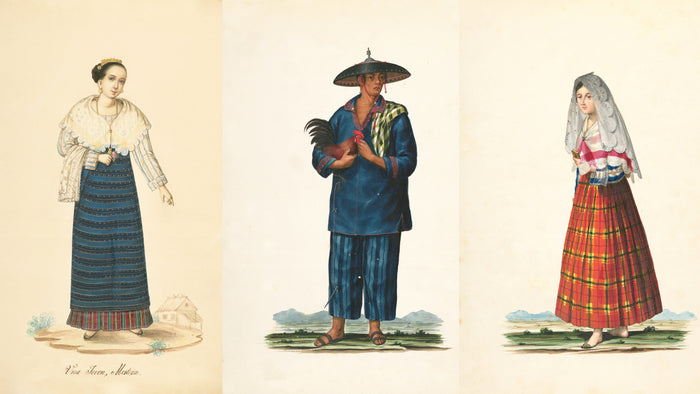
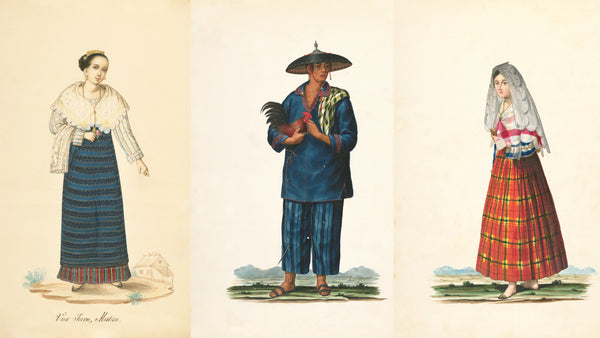
On February 3, 1945, American and Filipino forces entered Manila to retake the city from Japanese occupation. By early March, an estimated 100,000 civilians were dead and entire districts had been reduced to rubble. Intramuros, the 16th-century walled city that had survived Spanish colonization, the British occupation of 1762, and four decades of American administration, was nearly leveled. The churches, streets, and facades that old Manila prints historical collections had preserved for decades were gone in weeks.
That destruction is why these prints now carry weight that goes beyond historical curiosity. For much of what they show, no physical structure remains. The images are the record.

What Old Manila Pri![]() nts Historical Collections Actually Document
nts Historical Collections Actually Document
A print of Calle Escolta from the early 1900s is not a picture of a street. Escolta was Manila's primary commercial artery through the Spanish colonial period and well into the American era, and a sequence of prints from different decades lets you watch an entire economic transformation unfold. Spanish-era shop houses with stone arcades gave way to American-period commercial facades with plate glass windows and electric signage. The street's changing shopfronts, transport modes, and street furniture document colonial modernization more precisely than any written account.
The Library of Congress Philippine collection holds glass-plate negatives and photographic prints from the American colonial period, many of them digitized and accessible for research. These images show Escolta at fixed moments: American soldiers on newly occupied streets in 1898, Filipino clerks in Western dress outside department stores in the 1910s, motor cars and calesas sharing road space in the 1930s. Each image is a data point about how Manila absorbed colonial transition while maintaining the commercial rhythms the district had carried since the galleon trade era.

Beyond Escolta, the surviving visual archive covers the port and wharves, Binondo's market activity, street vendors, abaca grading, and horse-drawn transport giving way to early motor traffic. Street photographs and market prints document the livelihoods that supported the city from below, alongside the institutional architecture and social ceremonies that documented it from above.
The limitation of this archive is worth naming. Surviving prints disproportionately show public and commercial life. Domestic interiors and working-class private spaces are rarely documented. That skew is itself historical evidence about what colonial-era image-makers valued and what they chose to ignore.
Escolta, Intramuros, and the Cosmopolitan City That No Longer Exists
The prints and photographs that survive from 1930s Manila document a city at the height of its pre-war social complexity. Spanish-era elites maintained the Casino Español and the rituals of late colonial social life. American-period Filipino professionals gathered at Club Filipino. Expatriate organizations including the American Elks and the Army-Navy Club occupied purpose-built clubhouses. Chinese merchants had maintained continuous commercial presence in Binondo since the 16th century. All of these communities appear in the visual record, often in the same frame.
Tatler Asia's account of Philippine high society before World War II describes Manila's 1930s social calendar in detail: balls, clubs, cabarets, and hotels serving a cosmopolitan elite that mixed Filipino, Spanish, American, and Chinese participants. The photographs that survive from this period, ball gowns, club interiors, formal portraits on Escolta, are pre-war Manila art documents of a social world that was fourteen years from obliteration and had no reason to know it.

Fort Santiago, at the western end of Intramuros, appears frequently in both prints and photographs. Built in 1571 by Spanish conquistador Miguel López de Legazpi on the site of a previous Tagalog fortification, it served simultaneously as military headquarters, prison, and colonial administrative center. Prints of Fort Santiago document the physical architecture of Spanish colonial power in its most concentrated form. They also record what that architecture looked like before the 1945 battle reduced most of the surrounding district to ruins. The fort was partially restored after the war. The streets, adjacent buildings, and civilian life conducted in its shadow are gone.
The Santo Domingo Church, subject of a scholarly study on the intangible heritage of pre-war Manila, was destroyed in 1945. Images of its processions, particularly La Naval de Manila and Good Friday observances, document how religious practice structured Manila's civic calendar and public space across political regimes. The prints record both the ritual and the lost architecture that framed it.
Why These Prints Matter to Collectors and the Filipino Diaspora Today
Philippine heritage print collecting has grown substantially in the past two decades, driven in significant part by the Filipino diaspora. For Filipinos living outside the Philippines, a historical print of Manila offers something a contemporary photograph cannot: documented evidence of a city that existed before the war, before the rapid post-war urbanization that reshaped Manila's built environment, and before the specific street or neighborhood that a family remembers was demolished or transformed beyond recognition.
A vintage Manila illustration of Escolta, the port, or the Binondo market gives a collector a primary source tied to a specific place at a specific moment. That specificity separates archival prints from generic historical imagery. The [INTERNAL LINK: old Manila prints collection] brings this archive into domestic spaces in a form suited to homes built around a genuine connection to Philippine history.

For interior-focused buyers, period prints carry a practical visual quality as well. The tonal range of glass-plate photographs, silver and sepia on archival paper, the quality of light in colonial-era street scenes, produces images that hold their own in contemporary interiors without visual aggression. A reproduction of Escolta from 1910, framed in natural oak, reads as a document on a wall. That distinction matters to collectors who want their spaces to carry meaning rather than atmosphere.
The research value of these images continues to grow. Urban historians, scholars, and heritage preservation advocates use pre-war prints to reconstruct lost streetscapes, verify architectural details, and map the social geography of a city that no longer physically exists in the form they document. A collector who acquires these prints becomes a custodian of that research archive, whether that was the intent or not.
The Prints That Survived the Battle and What They Show
Not all of Manila's visual archive survived 1945. The battle destroyed private collections alongside the buildings they documented. What survived came through institutional archives, overseas collections, and the holdings of families who evacuated before the fighting reached their districts.
The Library of Congress holds its Philippine material partly because American officials and military photographers documented Manila systematically during the colonial period, and those records entered federal archives outside the country. The Biblioteca Nacional de España holds comparable material from the Spanish colonial period. Together, these two institutions form the primary backbone of what researchers and collectors can reliably access today.
Among the most significant surviving categories are the maps produced during Spanish and American colonial administration. A sequence running from the 1734 Murillo Velarde map through the American-era Coast and Geodetic Survey series documents Manila's physical growth across two centuries, from a walled city at the mouth of the Pasig River to a metropolitan area expanding in every direction. These cartographic prints are old Manila prints historical documentation in its most systematic form: measured, attributed, dated, and produced for administrative purposes, which is precisely why they function as reliable primary sources rather than impressionistic images.

Religious imagery forms a separate and equally important category. Prints documenting La Naval de Manila processions, the Quiapo Black Nazarene in its pre-war form, and Good Friday observances in Intramuros record practices that continued across Spanish and American colonial periods and survived into the present, even as the physical spaces were destroyed and rebuilt around them.
Reading a Print as a Document
A historical print of Manila repays slow looking. The street scene in the background of a posed portrait tells you what transport was in use, what commercial signs were visible, what the ambient texture of that block felt like to someone standing there. The crowd assembled for a church procession tells you something about neighborhood density, dress, and the social mixing that religious festivals produced in a city structured by class and race.
According to the National Historical Commission of the Philippines, the preservation of documentary visual records is central to understanding Philippine urban history, particularly for periods and districts where physical evidence no longer survives. The prints that remain from pre-war Manila are not supplementary to that history. They are primary evidence, and in many cases they are the only evidence that the specific street, building, or social gathering they show ever existed.
A Philippine heritage print of Escolta from 1910, reproduced on archival paper with the same fidelity the original demanded, brings the same quality of attention to a wall in Manila, in Cebu, or in a Filipino household anywhere in the world that the original brought to the archive where it has been stored for a century.
The city in the prints no longer stands. The prints do.
Old Manila Historical Print Collection
Available as a Fine Art Print
Archival prints of pre-war Manila, including colonial-era street scenes, Escolta commercial facades, Intramuros landmarks, and Binondo market life, carefully restored and reproduced as museum-quality fine art prints on archival paper. Each print documents a city that no longer exists in the form these images captured.
Made to order for collectors and heritage enthusiasts.
Visit our shop:
Maynila Archive Collections


