

Pasalubong predates the modern souvenir by centuries. The word comes from "pagsalubong," the Tagalog term for the act of meeting or welcoming someone, the gift arrives before the reunion begins, carried in the bag of someone who has been away. For anyone searching for a meaningful Filipino heritage gift for parents or family living outside the Philippines, that etymology matters. The object is evidence of a relationship maintained across distance. It says you were thinking of specific people, in a specific place, and you brought something back that could not have come from anywhere else.

What has changed in recent years is the depth of what is available. Philippine heritage gifts now range from regional food products tied to single provinces, to ethically produced textiles from indigenous weaving communities, to archival fine art prints that document the visual history of the archipelago. Each category carries different cultural weight. Choosing between them depends on what kind of connection the gift is meant to carry across the distance.
What Makes a Filipino Heritage Gift for Parents Worth Giving
Food is the most immediate carrier of regional specificity. Dried mangoes from Cebu, Barako coffee from Batangas, and bean-to-bar chocolate from Davao each carry the geography of a particular province. Auro Chocolate, based in Davao, sources its cacao from local farmers and has collaborated with Don Papa Rum, a sugarcane rum produced on Negros Occidental, to create region-specific bars that document the Philippines' growing cacao industry. A gift set built around these products tells a family abroad something about where the Philippines is now, not only where it was when they left.
Among the more historically grounded food gifts is Asin Tibuok, the "unbroken salt" produced in Albuquerque, Bohol. Makers soak coconut husks in seawater, sun-dry and burn them, then compress the ash into a dense orb through a months-long process. The Slow Food Foundation for Biodiversity has included Asin Tibuok in its Ark of Taste, an international catalogue of endangered food heritage. Only a handful of Bohol households still produce it. Sending a piece to a parent in London or Los Angeles is sending a documented cultural practice that is at genuine risk of disappearing.

The limitation of food as a heritage gift is its impermanence. A bag of dried mangoes is gone in a week, and the cultural connection it carried disappears with it. That is where craft and archival objects become the more durable category, and the more considered choice.
Craft, Textile, and the Hands Behind the Object
Philippine weaving traditions are among the most geographically diverse in Southeast Asia. Inabel, the traditional textile of the Ilocos region in northern Luzon, uses techniques and patterns documented since the pre-colonial period. Pinilian, binakul, and ikat are distinct weave structures found across the Cordillera and Ilocos, each tied to a specific community's visual vocabulary. The National Commission for Culture and the Arts has documented inabel as a living heritage textile, distinct in its geometric patterns and natural dye traditions from other Philippine weaves.
Filigree jewelry represents a parallel tradition. Working gold and silver wire into intricate openwork designs has Philippine antecedents that predate Spanish colonial contact, though the technique was further refined during the colonial period. The brand Amami produces contemporary filigree collections, including a series called Sibol, the Tagalog word for sprout or new growth, that maintain the craft as a living practice. A filigree piece sent to a family member abroad carries several centuries of Philippine metalwork history in a small box.

The Ivatan people of Batanes, the northernmost island group in the Philippines, have their own distinct material culture. The brand Kayu works with Ivatan craftspeople to produce wooden goods using locally sourced materials [VERIFY, confirm Kayu's Ivatan partnership details are still current before publishing]. The social enterprise Anthill collaborates with the Daraghuyan Tribe in Bukidnon, Mindanao, to produce handwoven parols, traditional Christmas lanterns, from patchwork local textiles. These objects carry the name of the community that made them. The gift includes the maker, and that attribution is part of what separates a heritage object from a generic souvenir.
Why Archival Art Prints Work as Heritage Gifts for Filipino Families Abroad
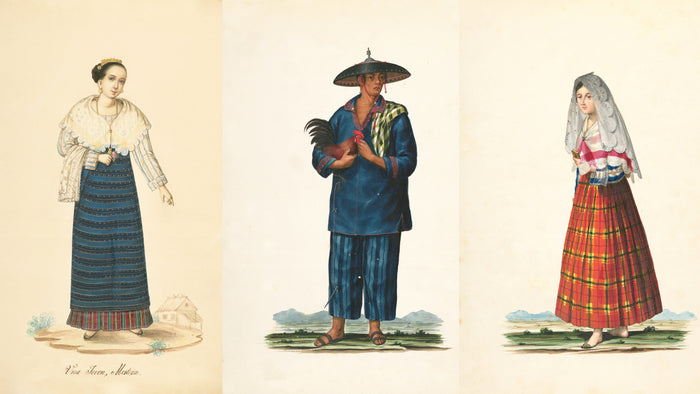
A Philippine art print gift occupies a different position from food or craft. Food is consumed. Craft is worn. A print goes on a wall and stays there. For a parent or sibling living in a house in Toronto, Sydney, or Riyadh, a framed archival print of colonial-era Manila, a historical map of the Philippine archipelago, or a Tipos del País portrait from the 19th century becomes a daily presence rather than a periodic reminder. That permanence is the point.
The Filipino diaspora numbers over 10 million people living and working abroad. For much of this community, a gift for Filipino family abroad that carries genuine historical weight functions differently from a pasalubong purchased at an airport. An archival print is not consumed or outgrown. It does not require explanation to look right in a room. It simply exists on the wall as evidence that the Philippines has a documented visual history worth displaying.

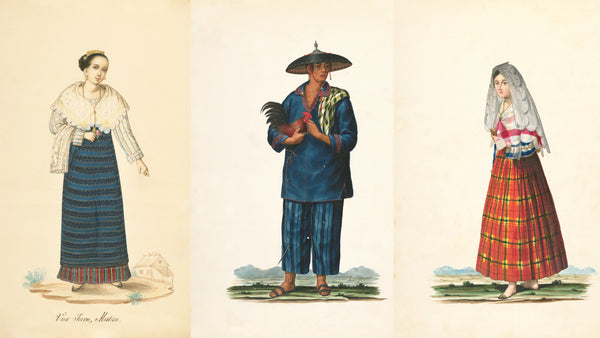
The Tipos del País illustrations of the 19th century, produced by Filipino artists including José Honorato Lozano and Justiniano Asunción, recorded the dress, occupations, and daily life of colonial-era Filipino society with a precision that no contemporary photograph existed to capture. The National Museum of the Philippines holds works from this period in its permanent collection, citing them as primary visual documents of Philippine social history. A parent in California who hangs a Lozano watercolor reproduction in their dining room is not decorating. They are making a decision about what their home remembers.
The 1734 Murillo Velarde map, engraved in Manila by Nicolás de la Cruz Bagay, was the first scientific survey of the entire Philippine archipelago. A reproduction framed in natural oak communicates a specific fact about Philippine history that no food product or woven bag can carry. [INTERNAL LINK: Philippine heritage print collection] brings that documented record into a home in a form that lasts.
National Heritage Month and the Calendar for Giving
The Philippines observes National Heritage Month every May, coordinated by the National Commission for Culture and the Arts. The designation gives heritage giving a cultural anchor on the calendar, but pasalubong operates year-round. Balikbayans returning from abroad typically carry gifts at Christmas, during Holy Week, and around major family occasions. The heritage gift category has grown around all of these moments, driven partly by the diaspora's increasing interest in heritage documentation and partly by brands and social enterprises that have made traditional objects available at accessible price points.
Christmas gifts framed around Noche Buena, the traditional Christmas Eve meal, tend to center on food: regional delicacies, coffee sets, chocolate bars. But the shift toward craft and archival objects has been visible in recent years. A woven parol from the Daraghuyan Tribe, ordered through Anthill, arrives at a home in Germany as a documented object from a specific Mindanao community. A filigree necklace from Amami's Sibol collection arrives as a piece of a metalwork tradition that predates the colonial period. A Tipos del País print arrives as a reproduction of a 19th-century Filipino artist's observation of his own society.

Each of these gifts gives the recipient something to explain to someone who asks about it. That capacity to generate a conversation about origin, material, and history is what separates a heritage gift from a souvenir. Souvenirs mark that someone was somewhere. Heritage gifts document what that somewhere was.
What the Gift Is Actually Saying
Pasalubong emerged from a society where travel was slow, distance was measured in weeks of sailing rather than hours of flight, and returning home with something tangible was the clearest way to prove you had been thinking of the people you left. The structure of the practice has not changed. What has changed is the depth of what is available to carry.
A parent living abroad who receives a framed archival print of the Parian Gate in Manila, or a colorized reproduction of Calle Escolta in the 1920s, receives evidence of what the city looked like before the Battle of Manila reduced most of it to rubble in February and March of 1945. That context does not need to be written on a card. The image carries it. The receiver may or may not know the full history at the moment the gift arrives. The gift creates the occasion to find out.
The most durable heritage gifts hold a question inside them: not just where is this from, but who made it, when, and what was happening in that place at that time. A print of colonial-era Manila on a wall in a Filipino household in New Jersey or Melbourne asks that question every day, quietly, without requiring an answer.
Philippine Heritage Print Collection
Available as a Fine Art Print
Tipos del País portraits by José Honorato Lozano and Justiniano Asunción, colonial-era maps including the 1734 Murillo Velarde, and archival views of pre-war Manila, carefully restored and reproduced as museum-quality fine art prints on archival paper. Each print documents a specific moment in Philippine visual history.
Made to order for collectors and heritage enthusiasts.
Visit our shop:
Maynila Archive Collections


