

Some images do more than represent a place. They define how it is remembered.
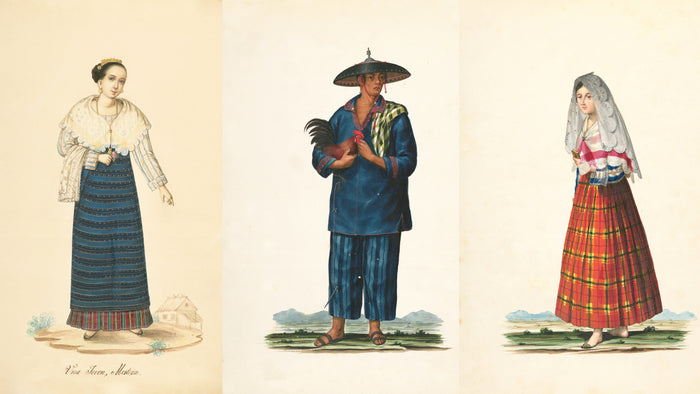
In the Philippines, Tipos del País played that role. These detailed portrayals of people in everyday dress became one of the earliest visual records of Filipino life during the 19th century.
At the center of this tradition is José Honorato Lozano. His work did not simply illustrate society. It helped shape how the Philippines was seen, both by foreigners and by Filipinos themselves.
This article explores why Lozano’s work matters, not only as art, but as a foundation for cultural memory and identity.
The Short Answer
José Honorato Lozano (c. 1807–1879) was a Filipino artist known for his Tipos del País and letras y figuras. His works depict people, clothing, and daily life in 19th-century Manila with clarity and detail.
More than an artist, Lozano was a cultural chronicler. His images sit at the intersection of art, documentation, and identity-building, capturing a society in transition.
What Are Tipos del País?
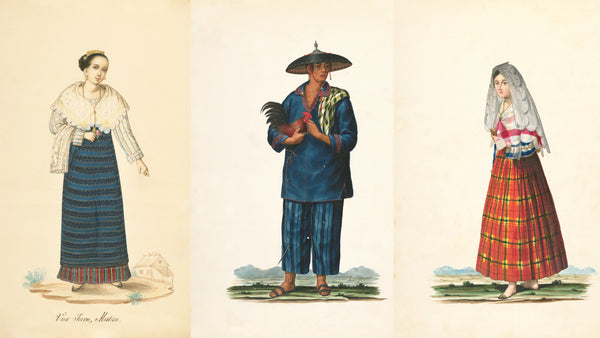
Tipos del País refers to a genre of small, highly detailed images that portray local people in recognizable attire and roles.
These works often show individuals defined by their dress, profession, or social position. A vendor, a mestiza, a carriage rider. Each figure becomes a type, a way to visually categorize society.
They were not created only for artistic purposes. They were also sold as souvenirs.
As noted by Mapping Philippine Material Culture, these images functioned as both “cultural records and commercial objects,” offering foreign viewers a readable version of Philippine life.
This dual role is key. Lozano’s work was designed to be seen, understood, and circulated.

Historical Context: The Philippines in the 19th Century
Lozano worked during the Spanish colonial period, at a time when Manila was a busy trading hub.
Foreign merchants, travelers, and expatriates moved through the city. With them came a demand for objects that represented the local culture.
Art responded to this demand.
Small, portable images became popular. They were easy to carry and easy to sell. Artists like Lozano adapted by producing works that combined local subjects with techniques influenced by European traditions.
According to discussions in Philippine visual studies, Tipos del País were part of a broader global pattern where images circulated as both knowledge and commodity.
They allowed viewers to “read” a place through its people.
José Honorato Lozano: Biography
José Honorato Lozano was active in Manila in the early to mid-19th century.
He is known for two main bodies of work. His Tipos del País and his letras y figuras, where human figures form letters to spell names or phrases.
His practice reflects the artistic environment of Manila at the time. A mix of local craftsmanship and market-driven production.
He worked within a system where art was both cultural expression and commercial activity. This positioning allowed him to reach a wide audience, from local elites to foreign buyers.
His Work: Style and Approach
Lozano’s strength lies in clarity.
His compositions are direct and easy to read. Each subject is isolated, well-defined, and carefully presented.
Clothing is the focal point. Fabrics, silhouettes, and accessories are rendered with precision. These details are not decorative. They are informative.
They tell you who the person is.
His figures often stand in controlled poses, allowing the viewer to focus on visual cues. There is little distraction. The message is clear.
This approach makes his work accessible while still being highly descriptive.

More Than Art: A Cultural Archive
Lozano’s work goes beyond aesthetics.
It serves as a visual archive of Filipino life in the 19th century. At a time when photography was limited, these images provide rare insight into how people dressed, moved, and presented themselves.
Scholars often highlight this archival value.
As described in studies of Philippine material culture, these works “illuminate costume, social roles, and regional differences across the archipelago.”
Each detail becomes a piece of historical evidence.
For historians, collectors, and researchers, Lozano’s work is not just visual. It is informational.
Commerce and Circulation
Lozano’s images were made to circulate.
They were sold as souvenirs to foreign buyers in Manila. This commercial aspect shaped how the works were created.
Subjects needed to be recognizable. Scenes needed to be clear. The goal was to communicate quickly.
Art became a product.
According to curatorial descriptions and gallery archives, these images functioned like early visual postcards. They traveled across borders, shaping how the Philippines was perceived abroad.
This circulation increased their impact.

Influence on Filipino Identity
Lozano’s work contributed to something larger than documentation.
It helped build a visual vocabulary of what it meant to be Filipino.
By representing different social types, clothing styles, and everyday scenes, his images created a shared reference. A way to see the diversity of Filipino life within a single framework.
This visual language later influenced nationalist movements.
Artists and writers looking to define Filipino identity drew from these early representations. They provided concrete imagery that could be referenced and reinterpreted.
In this sense, Lozano’s work is part of the foundation of Filipino cultural identity.

Why Lozano Still Matters Today
Today, Lozano’s work continues to be studied, collected, and exhibited.
His images appear in archives, galleries, and academic research. They are used to understand not only art history, but also social and cultural history.
Collectors value them for their rarity and detail. Institutions value them for their documentation.
They remain relevant because they answer a simple but important question.
What did Filipino life look like at that time?

Conclusion
José Honorato Lozano was not just an artist.
He was a chronicler of his time.
Through Tipos del País, he captured a society through its people, its clothing, and its everyday moments. His work stands at the intersection of art, commerce, and identity.
Today, it continues to inform how the Philippines is understood, studied, and remembered.
Available as a Fine Art Print
Maynila Archive carries a curated selection of José Honorato Lozano's Tipos del País works, carefully restored and reproduced as museum-quality fine art prints on archival paper. Each piece is made to order for collectors and heritage enthusiasts.
Visit our shop: Explore the Tipos del País Collection
Further Reading and References
- José Honorato Lozano, Mapping Philippine Material Culture
- José Honorato Lozano and the Origins of Letras y Figuras, Tatler Asia
- Tipos del País: New Discovery in the Victoria and Albert Museum, VERA Files


