

1. Introduction
Many have seen Tipos del País without knowing the artist behind them.
These small, detailed images of people in traditional dress are often treated as simple curiosities. In reality, they are some of the most precise visual records of life in 19th-century Manila.
At the center of this tradition is Justiniano Asuncion. A painter whose work quietly documented a society in transition.
Understanding who he was is not only about art. It is about seeing how Filipinos lived, dressed, and presented themselves during the colonial period.
In this article, you’ll discover who Justiniano Asuncion was, what Tipos del País really represent, and why his work still matters today.
2. The Short Answer
Justiniano Asuncion (1816–1901) was a Filipino painter known for his portraits and his role in the Tipos del Paístradition. He created detailed images of people in everyday attire, capturing the social life of Manila during the 19th century.
More than an artist, he acted as a visual documentarian. His works recorded how people looked, dressed, and moved within a rapidly changing colonial society.
3. What Is Tipos del País?
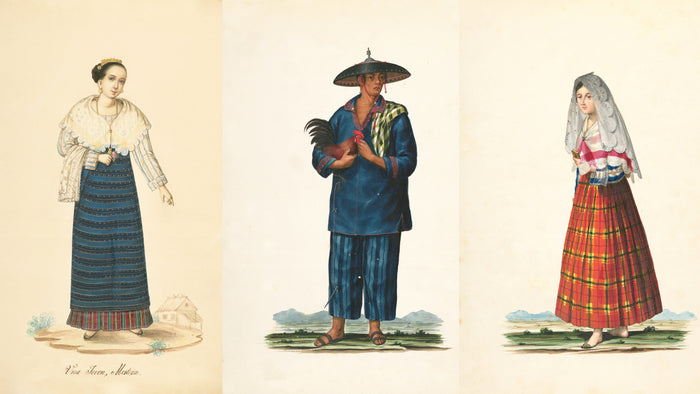
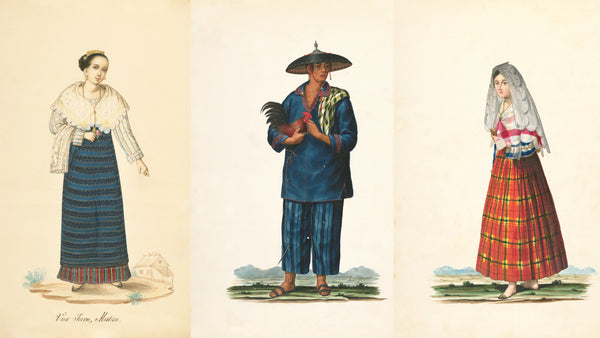
Tipos del País refers to a 19th-century genre of small, highly detailed images that depict local people in their typical clothing and daily activities.
These works were often created as souvenirs for foreign merchants and travelers visiting Manila. They offered a visual snapshot of the Philippines through recognizable figures and scenes.
"Rather than focusing on grand events, they captured ordinary life."
Rather than focusing on grand events, they captured ordinary life. A woman on her way to mass. A mestizo dressed in formal attire. A vendor or a local figure identified by dress and posture.
What makes them valuable today is their precision. Clothing, accessories, and gestures were carefully rendered, turning each image into a record of social identity and cultural expression.

4. Historical Context: Manila in the 19th Century
To understand Asuncion’s work, you need to understand Manila at the time.
In the 19th century, Manila was a busy and cosmopolitan trading hub. Foreign merchants, travelers, and colonial officials moved through the city, creating demand for objects that represented local life.
Art responded to that demand.
Small, portable images became popular. They were easy to carry, easy to sell, and visually rich. Artists began producing works that blended local subjects with European artistic techniques.
This environment shaped the Tipos del País tradition. It was not only artistic. It was also commercial. These images were made to be collected, exchanged, and taken abroad as visual souvenirs of the Philippines.
5. Justiniano Asuncion: Biography
Justiniano Asuncion was born in 1816 in Manila, in the district of Santa Cruz. He came from a Filipino-Chinese family and lived during a period of cultural and social transformation in the Philippines.
He built a reputation as both a portrait painter and a specialist in Tipos del País. His work stood out for its attention to detail, especially in clothing and facial features.
Beyond his artistic career, he held a local leadership role as cabeza de barangay in Santa Cruz. This position placed him within the local elite and connected him to a network of patrons and clients.
His life reflects the overlap between art, society, and status in 19th-century Manila. He was not only producing images. He was part of the very social world he was documenting.
6. His Work and Artistic Style
Justiniano Asuncion is best known for his precision.
His works are small in scale but rich in detail. He focused on portraiture and Tipos del País, using a miniaturist approach that allowed him to capture fine elements with clarity.
Clothing is central in his compositions. Fabrics, lace, embroidery, and accessories are carefully rendered. Nothing feels approximate. Each detail serves to define the subject.
His figures are often presented in simple, controlled poses. The posture, the gaze, and the objects they carry all contribute to identifying who they are socially.
Through this method, Asuncion turned everyday figures into clear visual types. Not exaggerated, but observed with accuracy.

7. Understanding the Subjects: Social Types in His Work
The people in Asuncion’s work are not random subjects. They represent recognizable social identities.
Each figure is defined through dress, posture, and context. A mestiza, a Chinese-Filipino, a local woman, or a member of the urban class can be identified through visual cues.
Clothing plays a key role.
Clothing plays a key role. It signals status, background, and cultural influence. Textiles, hairstyles, and accessories are used to distinguish one group from another.
Many scenes reflect everyday moments. Walking to mass, attending social visits, or simply standing in formal attire. These are not dramatic scenes, but they reveal how society functioned in public life.
In this way, Tipos del País becomes more than illustration. It becomes a structured view of a social system.
8. Why His Work Matters Today
Asuncion’s work holds value beyond aesthetics.
It acts as a visual archive of 19th-century Manila. At a time when photography was not yet widely used, these paintings provide direct insight into how people looked and presented themselves.
They help historians and collectors understand material culture. From clothing to accessories, each detail reflects real practices of the time.
They also show how Manila positioned itself in a global context. These images were made for circulation. They shaped how foreigners perceived the Philippines.
Today, his works continue to appear in collections, galleries, and auctions. Their relevance has not faded.

9. Legacy and Influence
Justiniano Asuncion occupies a key place in Philippine art history.
His contribution is not limited to technique. He helped define how Filipino identity was visually recorded during the colonial period.
understanding social life in Manila.
Through Tipos del País, he created a lasting reference for understanding social life in Manila. His works remain part of academic studies, museum collections, and private archives.
They continue to influence how this period is studied and represented.
10. Conclusion
Justiniano Asuncion was more than a painter.
He documented a society through careful observation. His work captures how people lived, dressed, and identified themselves in 19th-century Manila.
Through Tipos del País, he created images that still inform how we understand that time.
Seen this way, his work is not only artistic. It is historical.


