

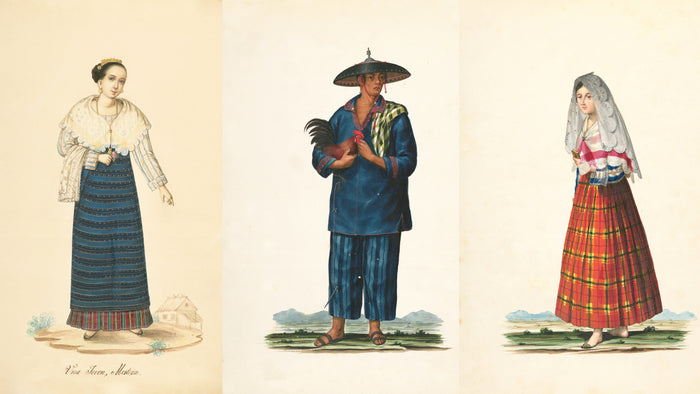
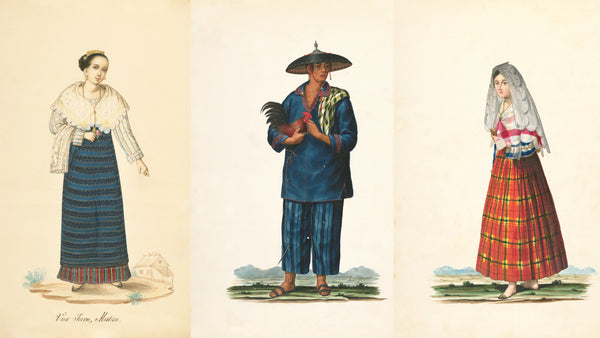
Before photography became widespread in the Philippines, artists documented everyday life through a genre known as Tipos del País. These watercolor illustrations portrayed Filipinos, mestizos, merchants, laborers, and elites through clothing, posture, and occupation, creating one of the richest visual records of nineteenth-century Philippine society.
Today, these works remain valuable not only as artworks, but also as historical documents that offer insight into the social structure, cultural diversity, and visual identity of the Spanish colonial Philippines.
What Does “Tipos del País” Mean?
The term Tipos del País translates to “Types of the Country.” It refers to a genre of watercolor illustrations popular during the nineteenth century in the Philippines, particularly during the Spanish colonial period.
These artworks typically depicted individual figures dressed in traditional clothing or associated with a particular occupation, ethnicity, or social class. Vendors, soldiers, mestizas, laborers, musicians, merchants, and members of the local elite were all common subjects.
Unlike religious paintings or formal portraits commissioned by wealthy families, Tipos del País focused on everyday people and urban life. The figures were often carefully posed against minimal backgrounds, placing attention on clothing, accessories, and physical appearance.
At a time when photography was still rare in the Philippines, these illustrations became an important visual record of the country and its people.
For additional historical examples, the Mapping Philippine Material Culture archive provides several documented Tipos del País illustrations from the nineteenth century.

Why Tipos del País Matters in Philippine History
One of the reasons Tipos del País remains historically important is its documentary value.
These illustrations reveal how colonial Philippine society was visually organized and understood during the nineteenth century. Clothing, textiles, jewelry, hats, and posture all carried social meaning. Through these details, artists communicated distinctions between social classes, ethnic communities, and occupations.
The works also provide insight into the multicultural nature of the Philippines during the colonial era. Chinese merchants, Spanish mestizos, native Filipinos, and members of the principalia all appeared within the genre, reflecting the layered social hierarchy of the period.
Today, historians continue to study these images to better understand daily life, fashion, labor, and identity in colonial Philippines.
The Manila FAME overview of Tipos del País further explores how these illustrations documented social classification and colonial identity.
The Artists Behind Tipos del País
Several Filipino artists became closely associated with the genre and helped shape its development.
Damián Domingo
Often considered one of the earliest and most influential practitioners of Tipos del País, Damián Domingo became known for his detailed depictions of traditional Filipino dress. His works are now considered essential references for nineteenth-century Philippine clothing and social customs.
Justiniano Asunción
Justiniano Asunción refined the genre through delicate watercolor techniques and strong attention to facial expression and posture. His illustrations often feel more intimate and observational, capturing both elegance and personality within everyday subjects.
Many of the best-known Tipos del País illustrations reproduced today are associated with Asunción’s body of work, including works such as Guardia de Vino, Una Joven Mestiza, and India Natural de Filipina.
Read our article about Justiniano Asunción

José Honorato Lozano
José Honorato Lozano expanded the visual language of the genre by combining Tipos del País with decorative and symbolic compositions. He is also known for his letras y figuras works, where human figures were arranged to form letters and words.
His illustrations are recognized for their refined execution and strong narrative quality.

How Tipos del País Documented Colonial Society
Beyond their artistic value, these illustrations functioned almost like an early visual census of Philippine society.
Artists documented a wide range of social groups, often labeling figures according to ethnicity, occupation, or class. This included Indios, Chinese traders, mestizos, servants, military figures, and wealthy urban residents.
The emphasis on clothing was particularly important. During the nineteenth century, dress served as a visible indicator of identity and social standing. Fabrics, embroidery, accessories, and even posture helped communicate status within colonial society.
For modern viewers, these details provide a rare window into how people lived and represented themselves before the widespread use of photography.
Works such as Una Mestiza de Manila and Un Indio de Manila demonstrate how artists carefully differentiated subjects through clothing and presentation.
The Decline of the Genre
The popularity of Tipos del País began to decline toward the late nineteenth century as photography became more accessible.
Photographs gradually replaced watercolor illustrations as a faster and more direct method of documenting people and places. Artistic trends also evolved as the Philippines entered a period of political and cultural transformation.
Despite this decline, many surviving works remain preserved in archives, libraries, museums, and private collections around the world.
Today, they continue to serve as important visual records of Philippine history.
Why Tipos del País Still Matters Today
More than a century later, Tipos del País still resonates because it preserves a visual memory of the Philippines during a period of major social and cultural change.
These illustrations allow contemporary audiences to reconnect with historical identities, traditions, and ways of life that might otherwise feel distant or abstract. They also reveal the complexity and diversity of Philippine society during the colonial period.
For collectors, historians, designers, and art enthusiasts, Tipos del País offers a unique combination of historical depth and visual elegance.
As interest in Philippine heritage continues to grow, these works remain among the most important artistic documents of the nineteenth century.
Related archive entries:
-
Guardia de Vino
-
Una Joven Mestiza
-
Mestizo Chino
-
India Natural de Filipina
-
Country Girl

Tipos del País: Philippine Historical Illustrations
Available as a Fine Art Print
Maynila Archive curates and restores Tipos del País watercolors from historical Philippine archives, reproduced as museum-quality fine art prints on archival paper. Each piece is made to order for collectors and heritage enthusiasts.
Visit our shop: Explore the Tipos del País Collection
Further Reading and References
José Honorato Lozano, Mapping Philippine Material Culture
José Honorato Lozano and the Origins of Letras y Figuras, Tatler Asia
Tipos del País: New Discovery in the Victoria and Albert Museum, VERA Files


